
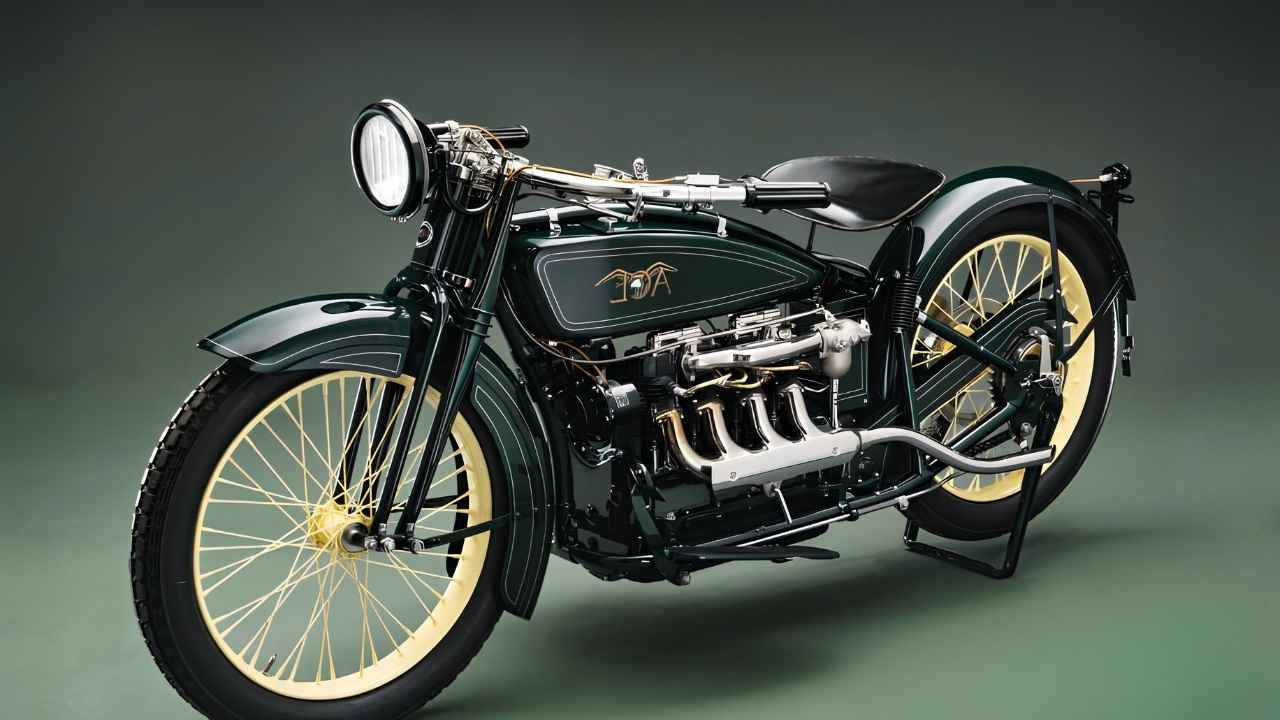
Vintage 1920s Ace Motor The early 20th century was one of the most exciting periods in motorcycle history. Manufacturers across America and Europe were experimenting with new technologies, engine configurations, and innovative designs that would shape the future of motorcycling. Among the legendary names from this golden era, Ace Motor Corporation earned a special place with its advanced inline four-cylinder motorcycles. Even today, the vintage 1920s Ace motorcycle remains one of the most admired classic machines ever built.
Known for its smooth performance, elegant engineering, and impressive speed for its time, the Ace inline four-cylinder motorcycle represented innovation far ahead of its generation. It combined mechanical sophistication with stylish craftsmanship, creating a motorcycle that appealed to both racers and touring enthusiasts. Decades later, collectors and vintage motorcycle lovers continue to appreciate the beauty and historical importance of these machines.
The Birth of Ace Motor Corporation
Ace Motor Corporation was founded in the early 1920s in the United States during a period when the motorcycle industry was rapidly evolving. The company was created by talented engineers and designers who wanted to build motorcycles that offered superior performance and reliability compared to many competitors of the time.
One of the most remarkable aspects of Ace motorcycles was their inline four-cylinder engine design. While most motorcycles during the 1920s used single-cylinder or V-twin engines, Ace introduced a smoother and more refined engine configuration that delivered impressive power and balance.
The company quickly gained attention among motorcycle enthusiasts because of its engineering excellence and racing capabilities. Ace motorcycles became known for speed, endurance, and innovation, helping the brand establish a strong reputation during a competitive era of American motorcycling.
The Revolutionary Inline Four-Cylinder Engine
The heart of the 1920s Ace motorcycle was its advanced inline four-cylinder engine. At a time when such technology was rare in motorcycles, Ace engineers created a machine that offered smooth power delivery and reduced vibration.
The inline four-cylinder engine layout allowed the motorcycle to achieve higher speeds while maintaining excellent balance. Riders appreciated the refined riding experience, especially during long-distance travel. Compared to many motorcycles of that period, the Ace felt more stable and sophisticated on the road.
The engine was mounted longitudinally within the frame, giving the motorcycle a unique appearance that immediately distinguished it from competitors. Its exposed mechanical components and polished metal surfaces added to the machine’s visual charm.

Performance was one of the key reasons for the motorcycle’s popularity. The powerful engine allowed riders to reach speeds that were considered extraordinary during the 1920s. For many enthusiasts, the Ace represented the perfect combination of speed and engineering innovation.
Elegant Vintage Styling
One of the reasons vintage Ace motorcycles remain highly admired today is their timeless styling. The design reflected the craftsmanship and attention to detail commonly found in early American motorcycles.
The motorcycle featured a long and narrow fuel tank, large spoked wheels, and a stretched frame design that gave it a graceful appearance. The exposed engine layout showcased the mechanical beauty of the machine, something many collectors still appreciate today.
Chrome accents and polished metal components added elegance to the overall design. Leather saddles, vintage handlebars, and classic fenders contributed to the motorcycle’s authentic retro identity.
Unlike modern motorcycles filled with plastic body panels and digital displays, the Ace motorcycle embraced simplicity and raw mechanical artistry. Every part of the machine was visible, creating a connection between rider and engineering that is difficult to find in modern bikes.
Performance and Riding Experience
For a motorcycle built during the 1920s, the Ace delivered remarkable performance. Riders often praised its smooth acceleration and impressive highway capability. The inline four-cylinder engine produced consistent power, making the motorcycle suitable for both city streets and long-distance touring.
The riding position was comfortable for its era, allowing riders to enjoy extended journeys without excessive fatigue. The suspension systems of the time were basic compared to modern motorcycles, but the Ace managed to provide a stable and controlled ride.

Another advantage of the four-cylinder design was reduced engine vibration. Many motorcycles of the 1920s were known for rough performance and mechanical noise, but the Ace offered a smoother and more refined experience.
The motorcycle also became popular in racing circles. Its strong engine and high-speed capability made it competitive in endurance races and speed events. This racing success helped strengthen the brand’s image as a manufacturer of premium performance motorcycles.
The Role of Ace in Motorcycle History
The Ace motorcycle played an important role in shaping the development of future motorcycles. Its innovative engineering demonstrated that four-cylinder engines could be practical and successful in motorcycles.
Many historians consider Ace motorcycles to be among the earliest examples of high-performance touring bikes. The company’s focus on speed, comfort, and engineering quality influenced later motorcycle manufacturers around the world.
Although Ace Motor Corporation operated for a relatively short period, its impact on motorcycle history remains significant. The technology and design ideas introduced by Ace would later inspire other legendary motorcycle brands.
The company eventually became associated with Indian Motorcycle, another iconic American manufacturer. Some Ace engineering concepts continued to influence future motorcycle development even after the original company ceased independent operations.
Craftsmanship and Mechanical Beauty
Vintage motorcycles from the 1920s are often admired as moving works of art, and the Ace inline four-cylinder motorcycle is no exception. Every component reflects the craftsmanship of an era when machines were built with precision and pride.

The engine itself is considered one of the motorcycle’s most beautiful features. The arrangement of cylinders, polished metal surfaces, and exposed mechanical parts create a visually striking appearance. Collectors often display Ace motorcycles in museums and exhibitions because of their artistic value.
The hand-finished details found on these motorcycles are difficult to replicate today. Fuel tanks, leather seats, handlebars, and engine casings were carefully crafted using traditional manufacturing techniques.
Unlike mass-produced modern motorcycles, each vintage Ace carries a sense of individuality and historical authenticity. Owning one is not just about transportation; it is about preserving a piece of motorcycling heritage.
Popularity Among Collectors
Today, original 1920s Ace motorcycles are considered rare and valuable collector items. Vintage motorcycle enthusiasts around the world actively search for restored or well-preserved examples of these machines.
The rarity of Ace motorcycles adds to their desirability. Since relatively few units were produced compared to larger manufacturers, surviving motorcycles are highly prized at auctions and classic vehicle events.
Collectors appreciate the Ace not only for its historical significance but also for its engineering uniqueness. The inline four-cylinder configuration remains impressive even by modern standards, especially considering the technology available during the 1920s.
Restoring a vintage Ace motorcycle requires patience, expertise, and dedication. Many parts are difficult to find, making restorations both challenging and rewarding for enthusiasts.

Influence on Modern Motorcycles
Although motorcycle technology has advanced dramatically since the 1920s, some ideas introduced by Ace motorcycles remain relevant today. Inline four-cylinder engines are now widely used in modern sport bikes and touring motorcycles because of their smooth performance and strong power output.
The Ace motorcycle proved that riders valued refinement and engineering sophistication alongside speed. Modern luxury touring motorcycles continue to follow similar principles by focusing on comfort, stability, and advanced performance.
The visual appeal of vintage motorcycles has also influenced modern retro-inspired bike designs. Many manufacturers now create motorcycles with classic styling elements inspired by early machines like the Ace.
This connection between past and present highlights the lasting importance of Ace Motor Corporation in motorcycle history.
The Emotional Connection with Vintage Motorcycles
Vintage motorcycles create a unique emotional experience that modern machines often cannot replicate. Riding or even viewing a classic Ace motorcycle brings a sense of nostalgia and appreciation for mechanical history.
The sound of the engine, the smell of fuel and oil, and the visible movement of mechanical components create an authentic experience that connects riders to a different era. Many enthusiasts describe vintage motorcycles as living pieces of history rather than simple machines.
The Ace inline four-cylinder motorcycle represents adventure, craftsmanship, and innovation from a time when motorcycles symbolized freedom and exploration. Its timeless character continues to inspire motorcycle lovers across generations.

Why the Ace Motorcycle Still Matters Today
Even after more than a century, the Ace motorcycle remains an important symbol of American engineering and creativity. It reminds modern riders how far motorcycle technology has evolved while also showcasing the brilliance of early innovators.
The motorcycle’s elegant design, advanced engine technology, and historical importance ensure that it will always hold a special place in the world of vintage motorcycling.
Museums, collectors, and motorcycle events continue to celebrate the Ace motorcycle because it represents one of the most influential periods in motorcycling history. It stands as proof that innovation and craftsmanship can create machines that remain admired for generations.
Key Highlights
- Legendary 1920s American motorcycle with inline four-cylinder engine
- Known for smooth performance and advanced engineering
- Elegant vintage styling with exposed mechanical beauty
- High-speed capability for its time period
- Important influence on future motorcycle development
- Rare and highly valuable among collectors today
- Comfortable touring performance with refined ride quality
- Strong historical connection with early American motorcycling
- Timeless craftsmanship admired by vintage enthusiasts worldwide
- Represents innovation, heritage, and classic motorcycle culture
Final Words
The vintage 1920s Ace Motor Corporation inline four-cylinder motorcycle remains one of the finest examples of early motorcycle engineering and design. Its revolutionary engine, elegant styling, and remarkable performance helped it stand out during a transformative period in motorcycle history.
More than just a classic machine, the Ace motorcycle represents the spirit of innovation and craftsmanship that defined the golden age of American motorcycling. Even today, its timeless beauty and mechanical sophistication continue to captivate collectors, historians, and motorcycle enthusiasts around the world.
As modern motorcycles become increasingly advanced with digital technology and electronic systems, the Ace serves as a reminder of a simpler era when engineering excellence and handcrafted design created machines with true character. Its legacy continues to inspire admiration more than a century after it first appeared on the road.